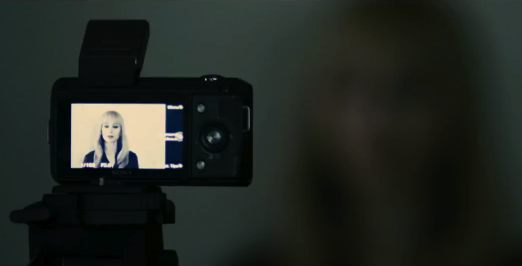
Miniature Tokyo by gsuraki
Here's an interesting use of the PlayMemories Time Lapse app available for both the NEX-5R and NEX-6.
Thanks gsuraki!


Sigma 60mm F2.8 DN- Featuring the natural perspective of mid-range telephoto lenses, together with a shallow depth of field, this lens allows the photographer to capture a single part of a subject with great bokeh effects. It has an angle of view equivalent to 90mm on the E-mount system (35mm equivalent focal length). The minimum focusing distance is 19.7 inches; the maximum magnification is 1:7.2. This lens also contains Special Low Dispersion (SLD) glass, which helps minimize axial and transverse chromatic aberration.
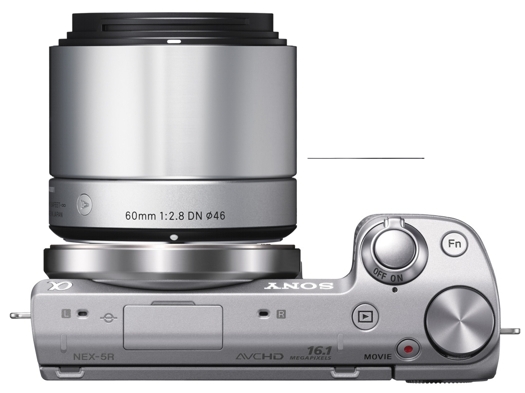
YOKOHAMA, Japan — Jan. 29, 2013—Sigma Corporation of America a leading researcher, developer, manufacturer and service provider of some of the world’s most impressive lines of lenses, cameras and flashes, today announced the release of four new lenses for the ART product line, including three lenses for mirrorless interchangeable lens cameras and one lens for DSLR cameras with APS-C size sensors. This announcement comes at the start of the CP+ Camera and Photo Imaging Show 2013 this week in Yokohama, Japan.
The new and updated Sigma lenses include the 30mm F1.4 DC HSM, which will be available in Sigma, Canon and Nikon mounts, and the 30mm F2.8 DN, 19mm F2.8 DN and 60mm F2.8 DN lenses, which are available for Sony E-Mount camera systems. Pricing and availability on all of these lenses has yet to be announced.
The 60mm F2.8 DN lens is entirely new to the Sigma lineup, while the 30mm F1.4 DC HSM and the 30mm F2.8 DN and 19mm F2.8 DN lenses are existing focal lengths that have been redesigned with enhanced optical performance and included as part of Sigma’s new Global Vision category restructuring. All three DN lenses incorporate telecentric optical designs and a linear, auto focusing motor that ensures accurate and quiet focusing for video recording. They also boast metal exteriors and a simply shaped focus ring, with varying textures to distinguish each part of the lens. In addition, DN users can choose between a black or silver finish to match their favorite equipment.
“We’re really proud of the super sharp lenses we’ve produced in the past year and these new Art lenses will continue to impress our fans and critics alike. They’re ideal for the landscape, portrait, still-life, close-up and casual photographer who values creative, dramatic outcomes above compactness and multifunction,” said Mark Amir-Hamzeh, president of Sigma Corporation of America. “The lenses are entirely made in Japan and they boast the new product line’s sleek design and enhanced quality control. We’re quite proud of these changes – and additions – to our lens lineup; they’re further evidence of Sigma’s forethought in this fast-moving industry.”

Sigma 19mm F2.8 DN – This high-performance, wide-angle lens has an angle of view equivalent to 28.5mm on the E-mount system (35mm equivalent focal length). As a wide-angle lens with excellent mobility, it is ideal for studio photography, architecture and starry skies. Its minimum focusing distance is 7.9 inches and its maximum magnification is 1:7.4.
Sigma 30mm F2.8 DN – This high-performance, standard lens has an angle of view equivalent to 45mm on the E-mount system (35mm equivalent focal length). This lens, which is perfect for casual and formal portraiture, documentary photography, travelogues and everyday shooting, includes a double-sided aspherical lens that enhances its optical performance. Its minimum focusing distance of 11.8 inches and its maximum magnification is 1:8.1.


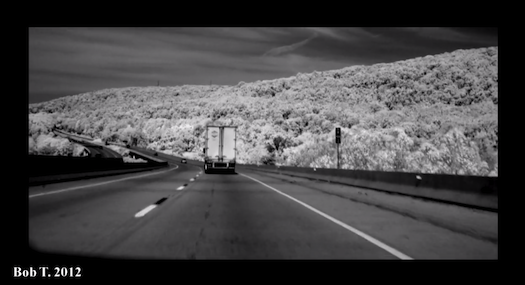
Infrared footage of Interstate 78 West seen in eastern Pennsylvania.
Capture device: A Sony NEX-5 modified to see near infrared.
Filter: MaxMax X-Nite XDP

Using the Sony NEX VG-20, demonstrating what can be shot with this camera in remote regions. All taken with standard Sony lenses, edited with Final Cut X, no grading, wanted to show how the camera performs right out of the box. Remember also that this camera takes beautiful stills.
The form factor is impressive. It's like shooting video with a Leica rangefinder camera. Only negative feedback is managing some of the controls off the LCD screen, especially in harsh weather conditions, but on the flip side, the camera is so portable, making video something fun to do again.


The footage was color corrected in Adobe After Effects CS5 which can handle AVCHD files. The files were exported using Apple Pro-Res 422 (HQ).
The editing was done in Final Cut Pro X. It was exported to H.246 for web uploads.
Canon EOS 5d Mark II €2500
Sony NEX-FS100 €5500
Arri Alexa €50000

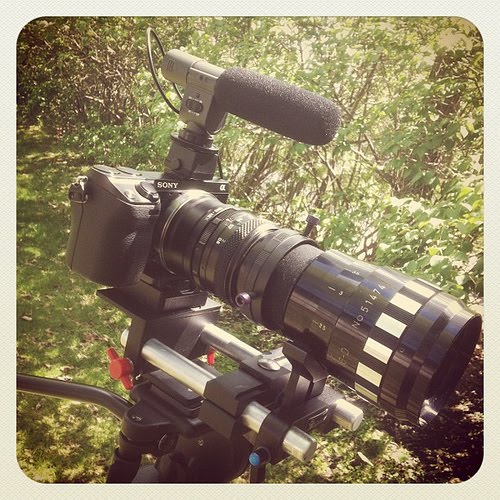
The Sony NEX-7 is a decent camera for shooting video. Like all DSLRs and CSCs it has its limitations, but it's not as bad as some. The scaling that Sony uses to go from 24MP down to about 2MP for video does produce some artifacts, but in many ways is better than the line skipping that Canon uses.
...
The reality is that in its price range it's an excellent choice. There are the usual video DSLR problems of moire, aliasing and rolling shutter, but no worse than many, and better than some. Indeed the highly regarded Canon 5D MKII's video quality is, in my opinion, worse than that from the NEX-7 in many respects.
consider the Sony FS100. It has a full raster sensor of 3.43 M pixels (2464 x 1394), which means that no scaling is required, reducing colour artifacting. The relatively large pixels also mean extreemly good low light sensitivity as well. It has a full range of cine oriented controls and features and is simply head and shoulders a better video camera than the NEX-7, or any video DSLR for the matter.